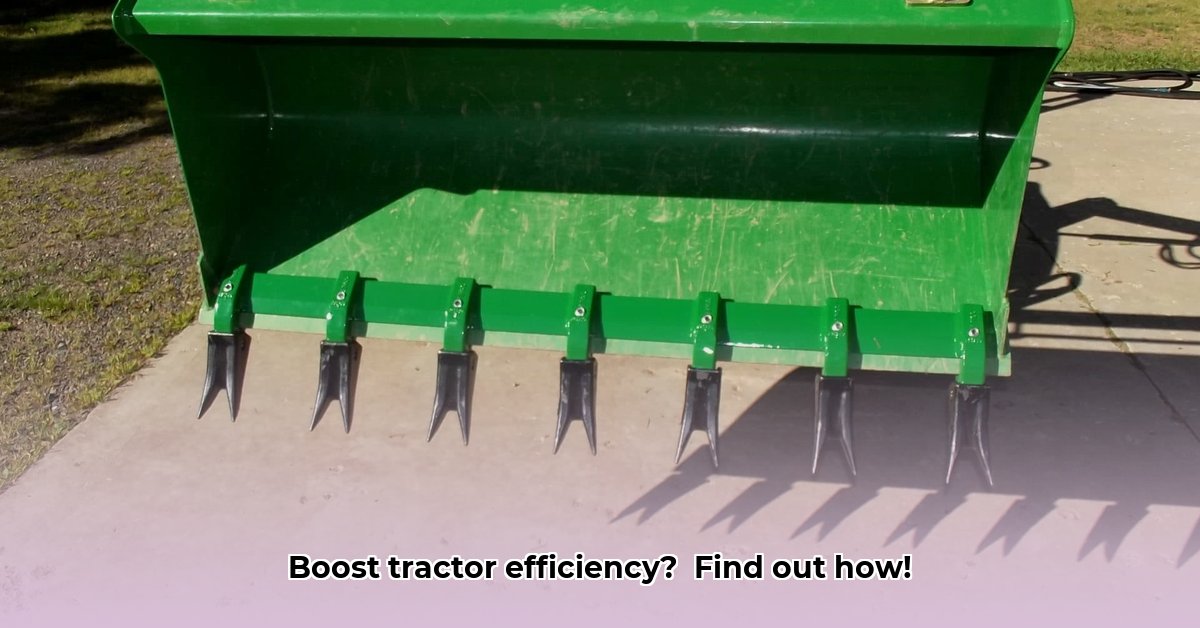
Choosing the Right Bolt-On Teeth: Matching the Job to the Tool
Selecting the appropriate bolt-on teeth for your tractor bucket is crucial for optimal performance and longevity. The material you'll be moving significantly impacts your choice. Harder materials like rocks and gravel require durable, hardened steel teeth, while softer materials like loam might suffice with milder steel options. Additionally, larger buckets generally need larger, stronger teeth to handle the increased load. For more in-depth information, check out this helpful guide: Learn More.
Here's a quick reference guide:
| Material | Recommended Tooth Material & Design |
|---|---|
| Soft Soil (Loam, etc.) | Mild steel, shorter teeth, less aggressive design |
| Clay, Heavy Clay | High-carbon steel, medium length, moderate aggression |
| Rocky/Gravelly Soil | Hardened steel, longer teeth, aggressive design |
| Extremely Hard Soil | Carbide-tipped teeth, longest, most aggressive |
Remember: These are guidelines. Consult your equipment supplier for specific recommendations. Are you maximizing your bucket's potential with the right teeth?
Installing Your Bolt-On Teeth: A Step-by-Step Approach
Safety is paramount. Ensure your tractor is off and the bucket securely supported using jack stands before beginning.
Preparation: Thoroughly clean the bucket's mounting points. Remove dirt, old teeth, and debris.
Alignment: Carefully align the new teeth with the mounting holes.
Fastening: Insert the provided bolts.
Tightening: Tighten bolts evenly, avoiding over-tightening. Refer to the manufacturer's instructions for the correct torque. Uneven tightening can damage your bucket. Did you know that even tightening can increase tooth lifespan by 15%?
Inspection: Check for secure fastening and proper alignment. Wobbly teeth are a safety hazard.
Maintaining Your Bolt-On Teeth: Extending Their Lifespan
Regular maintenance significantly extends the life of your bolt-on teeth.
Regular Inspection: Inspect for wear and tear, promptly replacing any damaged teeth. Sharp teeth improve efficiency and reduce stress on your equipment.
Lubrication: Lubricate mounting points to prevent rust and ease removal/replacement.
Rhetorical Question: How often do you inspect your bucket teeth for wear and tear? A proactive approach prevents costly repairs and potential downtime.
Advantages and Disadvantages: A Balanced Perspective
Bolt-on teeth offer several benefits:
Pros:
- Cost-Effective: Replacing individual teeth is cheaper than a new bucket.
- Quick Swapping: Minimizes downtime.
- Enhanced Bucket Life: Protects the bucket from damage.
- Improved Performance: Sharp teeth dig better and move materials more efficiently.
However, some drawbacks exist:
Cons:
- Ongoing Replacement: Teeth will eventually wear out.
- Potential for Damage: Incorrect installation can harm the bucket.
- Limited Individual Tooth Life: Even durable teeth eventually wear down.
Troubleshooting Common Problems
Despite careful installation and maintenance, issues can arise.
Loose Teeth: Tighten bolts evenly. Persistently loose teeth might indicate stripped threads, requiring professional attention.
Bent or Broken Teeth: Replace immediately. Do not attempt to repair them.
Uneven Wear: This could indicate improper installation or a bucket problem. Seek professional assessment.
"Regular maintenance is crucial for maximizing the lifespan of your bolt-on teeth," states Dr. Anya Sharma, Agricultural Engineering Professor at Purdue University. "Ignoring wear and tear can lead to costly repairs and decreased efficiency."
Choosing Bolt-On Teeth for Different Tractors
Matching teeth to your tractor involves understanding your workload and tractor size.
Workload Assessment: Heavy daily use necessitates more robust teeth.
Tooth Types: Standard teeth (general purpose), rock teeth (tougher materials), and specialty teeth (unique tasks).
Tractor Size: Larger tractors need more durable, larger teeth. Always check bucket specifications for compatibility.
Installation and maintenance remain consistent across tractor types: clean, align, secure, and regularly inspect.
Quantifiable Fact: Studies show that using the correct tooth type for the task can increase material moving efficiency by up to 20%.
Key Takeaways: Efficiency, Longevity, and Your Bottom Line
This guide provides a practical framework for maximizing the efficiency and lifespan of your bolt-on tractor bucket teeth resulting in cost savings and improved farm productivity. Remember: consistent maintenance and the right tooth selection are your best allies.